
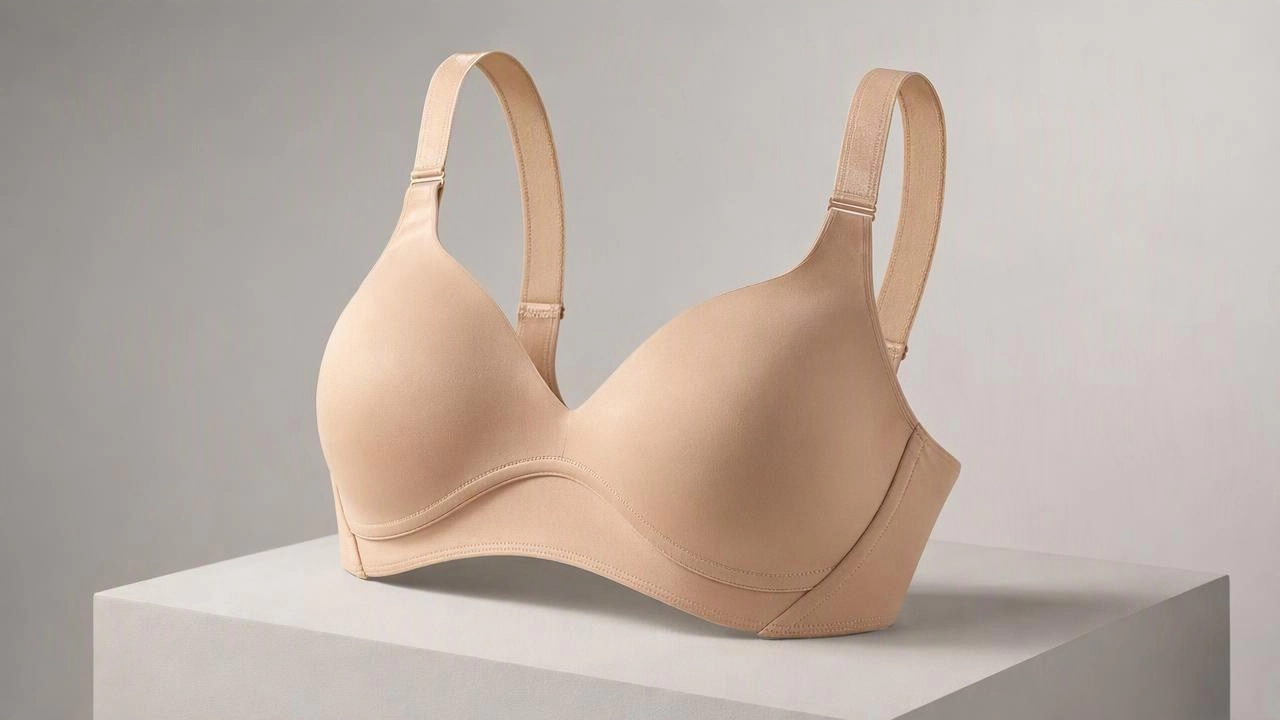
Why Half-Cup Bras Reward Careful Sourcing
Half-cup bras occupy a specific and profitable place in a lingerie collection. They offer a fashionable silhouette, a lighter feel than a full-coverage bra, and a strong visual identity that works well in campaign imagery. For buyers, the appeal is a style that sells at a premium without requiring the complex hardware of a corset bra.
At the same time, half-cup bras are less forgiving than they look. The reduced coverage means the fit has to be more precise, and the cup edge plays a much larger role in how the bra looks and feels. Sourcing a good half-cup program therefore depends on understanding fit mechanics, cup construction, materials and grading. This guide covers each of those areas from a buyer's perspective.
What Defines a Half-Cup Bra
A half-cup bra covers roughly the lower half of the breast, lifting it and leaving the upper area open. It typically uses a shallower cup with a defined top edge, and often includes a push-up element to maintain projection despite the reduced coverage.
Coverage versus lift
Because coverage is reduced, the lift must come from the cup shape and the underband rather than from the cup holding the bust in place. This is the central engineering challenge of a half-cup design.
Cup edge behavior
The top edge of a half-cup bra is the most visible part of the product. On the body it must lie smoothly, neither cutting into the bust nor gaping away from it. The edge finish, elastic tension and cup curve all determine whether this works.
Push-up construction
Many half-cup bras include a push-up component, which may be a graduated foam pad, a sling or an angled seam. The amount of push affects both the visual effect and the comfort, and it must be consistent across the size range.
Cup Construction Options
The cup is the technical heart of a half-cup bra, and the construction choice drives cost, fit and production complexity.
Molded cup
A single molded piece gives a predictable, smooth shape and is efficient for volume production. It suits designs where a clean, seamless surface is the priority.
Cut-and-sewn cup
Multiple panels sewn together allow a more tailored fit and better support for larger cup sizes. The trade-off is more sewing operations and a higher risk of visible seams under thin clothing.
Padded or pressed-edge cup
A padded cup with a pressed edge gives a clean finished line and a soft top edge, which is particularly appropriate for half-cup styles where the edge is on show.
Lace or mesh overlay
A structured cup can be covered with lace or mesh for decoration. The overlay must follow the cup shape exactly; any mismatch creates wrinkling at the very edge that should look cleanest.
Materials Commonly Used
- Lace: The signature material for many half-cup styles. Stretch and rigid laces behave differently and must be matched to the cup construction.
- Mesh: Used for lighter, more transparent looks and for support panels.
- Foam and padding: Provides shape and push-up volume.
- Nylon-spandex and polyester-spandex: Base fabrics for wings, bands and linings.
- Stabilized underband elastic: Essential for lift in a reduced-coverage design.
- Decorative trims: Bows, rings and lace edging, all of which must be skin-safe and durable.
Manufacturing a Half-Cup Bra
1. Brief and fit target
The buyer defines the desired silhouette, the amount of push, the coverage level and the size range. These decisions shape the cup construction from the start.
2. Cup development
The cup is developed first, because everything else follows from its shape. Cup volume, edge curve and padding are tested on a fit model before the rest of the bra is finalized.
3. Band and wing construction
The underband and wings are developed to hold the cup in position and provide lift. In a half-cup style, band tension is a critical specification.
4. Sampling and fit review
Samples are checked for edge behavior, lift, comfort and appearance. The most common corrections involve the top edge and the amount of push.
5. Grading
The pattern is graded across the size range, with attention to how the cup edge and band behave at the extremes. A half-cup bra that works at one size may fail at another if grading is careless.
6. Bulk production and inspection
Production follows the approved sample, with inspection focused on cup symmetry, edge finish, band tension and appearance.
Quality Control Points
- Cup edges are smooth and symmetrical on both sides.
- No wrinkling or puckering, especially along the visible top edge.
- Push-up volume is consistent between left and right cups.
- Underband tension is within tolerance and does not vary between units.
- Lace or mesh overlays align with the cup shape without distortion.
- Hardware and trims are secure and skin-safe.
- Color matches the approved standard.
Choosing the Right Half-Cup Style for Your Market
Everyday comfort half-cup
A softer cup with light push, suited to customers who want the half-cup look without heavy shaping. Frequently made with lace or mesh for a delicate appearance.
Fashion and occasion half-cup
A more dramatic cup with stronger push and decorative detail. Suited to brands whose customers buy for events and lingerie as fashion.
Fuller-bust half-cup
A half-cup design engineered for a larger cup size. This requires a cut-and-sewn or heavily structured cup and a stronger underband, and it is the most demanding half-cup category to produce well.
Plus-size half-cup
A half-cup program extended into larger band and cup sizes. Careful grading and material choice are essential to maintain comfort and appearance.
Cost Considerations
The price of a half-cup bra is driven by several factors.
- Cup construction: Cut-and-sewn and heavily padded cups cost more than simple molded cups.
- Lace and trim coverage: Decorative materials are often the largest material cost.
- Hardware: Decorative rings, sliders and closures add cost and assembly time.
- Size range and color count: Broad size ranges and many colors reduce production efficiency.
- Quality requirements: Stricter inspection standards increase cost but protect the brand.
Common Mistakes in Half-Cup Sourcing
- Approving a sample without checking the cup edge on a range of bust shapes.
- Underestimating the importance of band tension to lift.
- Using a decorative lace that cannot hold the cup edge shape.
- Ignoring how the design performs at the outer limits of the size range.
- Leaving packaging and labeling to the last moment.
Frequently Asked Questions
What is the difference between a half-cup bra and a balconette bra?
The terms overlap, and usage varies by market. In general, a half-cup bra gives reduced coverage with a low, horizontal top edge, while a balconette usually has a slightly higher edge and more coverage. In practice, the distinction is often a matter of degree, and buyers should specify coverage precisely rather than rely on the label.
Do half-cup bras work for larger cup sizes?
They can, if the cup is properly structured and the band is strong enough. Larger cup half-cup designs typically use cut-and-sewn construction and firmer materials to provide adequate lift.
What lace works best for half-cup bras?
Both stretch and rigid laces can be used, but the choice must match the cup construction. A rigid lace holds a defined shape well, while a stretch lace follows the body more closely but requires more careful pattern work to avoid a wavy edge.
How many sample rounds should I expect?
It varies with the complexity of the cup and the strictness of the fit requirements. Half-cup designs often need at least one revision focused on the top edge and the push level, and more if the size range is broad.
Can a half-cup bra be made seamless?
Partially. The cup itself can be molded and smooth, but the visible top edge and any lace overlay still require careful finishing. A fully seamless half-cup is possible with bonding, though decoration options are narrower.
Fit Testing a Half-Cup Bra Across Bust Shapes
Half-cup bras are more sensitive to bust shape than almost any other bra category, because the reduced coverage means the cup edge sits at a point where many busts vary. A sample that looks perfect on one fit model can fail badly on another. Buyers who plan for this variation get far better bulk results.
Shallow versus full upper bust
A customer with a full upper bust will fill a half-cup easily, sometimes to the point of overflow at the edge. A customer with a shallower upper bust may find the same cup gapes. This is why a half-cup program usually needs a fit review on more than one bust shape before approval.
Wide versus narrow root
A wide bust root needs a cup with adequate side width, while a narrow root can leave empty space at the side of the cup. Side width is set during pattern making, so it should be reviewed at the sampling stage rather than corrected later.
Projected versus shallow cup shape
A projected bust needs cup depth and a supportive band; a shallower bust needs a flatter cup that does not leave empty volume. Half-cup designs that use a single cup depth across all sizes tend to fail at one end of the range.
How to plan the fit review
The most efficient approach is to define two or three representative fit targets before sampling, then evaluate the sample against all of them. Comments should focus on the top edge, the band tension and the push level, since these are the three areas most likely to need adjustment.
How to Extend a Half-Cup Style into New Materials and Colors
Once a half-cup style is approved, extending it is usually far cheaper than developing a new one, provided the extensions respect the fit standard.
- Material extension: Replacing lace with mesh, or a rigid lace with a stretch lace, changes the cup edge behavior and should be re-sampled at least on the base size.
- Color extension: New colors are the least disruptive change, though trims must be matched and tested for color fastness.
- Hardware extension: Any change to closures or decorative rings should be pull-tested before bulk approval.
- Size extension: Adding sizes at the top or bottom of the range requires new grading and, in most cases, a fresh fit review at those sizes.
- Trim extension: Adding a bow or charm near the cup edge can affect how the edge sits, so placement should be confirmed on the sample.
Building a Half-Cup Program
A strong half-cup program usually starts with one or two well-developed styles that establish the fit standard for the brand, followed by extensions into different materials, colors and, where the market supports it, larger sizes. Because the top edge is so visible, the quality of the first sample tends to predict the quality of the whole program.
Buyers who treat the half-cup bra as a fit-critical, technically demanding style rather than a simple fashion item get better results. Defining coverage, push level and size range clearly at the brief stage reduces sample rounds, and it produces a product that photographs well and wears well, which is exactly what a premium half-cup bra needs to justify its price.

Plan Your Next Lingerie Collection
Share your product brief with our development team.