
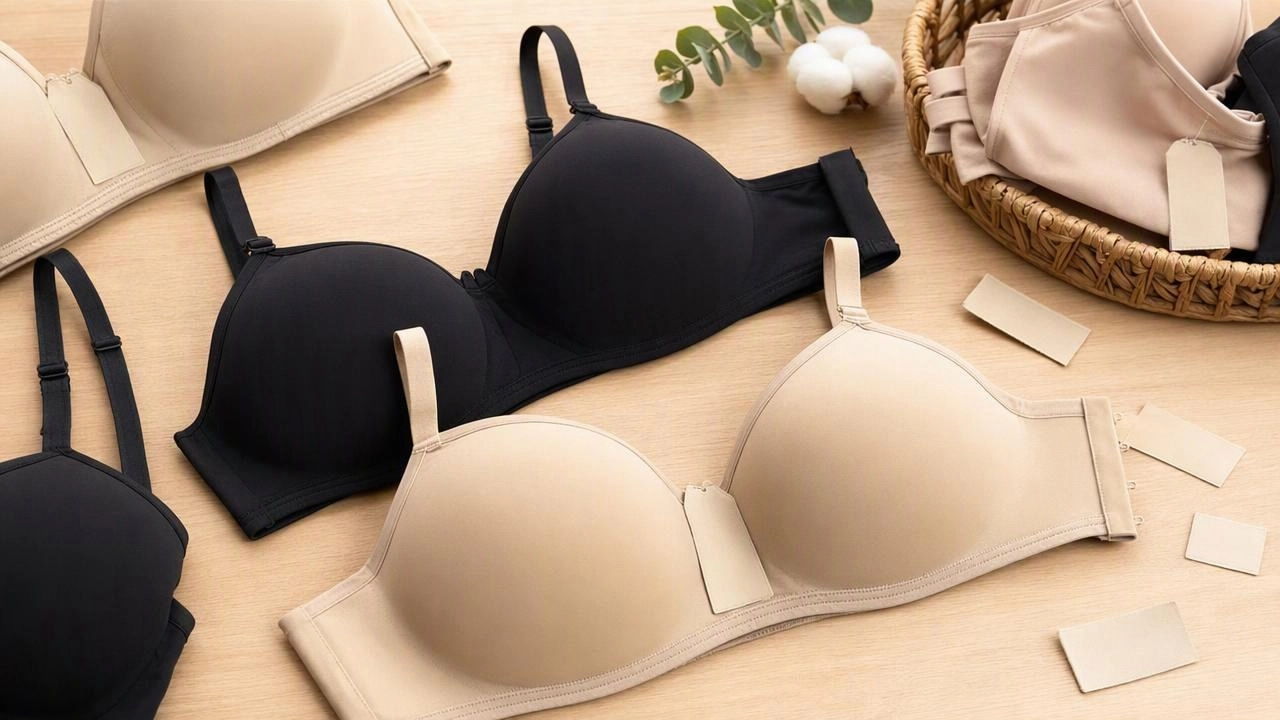
Why MOQ Is the First Question Every Buyer Asks
Minimum order quantity, or MOQ, is usually the first question a buyer asks a lingerie manufacturer, and often the one that decides whether a project proceeds. It is also one of the most misunderstood numbers in apparel sourcing. Buyers often assume MOQ is an arbitrary policy set by the factory, when in reality it is a direct consequence of fabric minimums, production efficiency and quality control requirements.
Understanding where MOQ comes from changes the negotiation. Instead of arguing about a number, a buyer can work with the manufacturer to find the levers that reduce it, or to justify paying more for a smaller run. This guide explains how MOQ is calculated in lingerie manufacturing, how it relates to unit cost and lead time, and what buyers can do to structure an order that works for both sides.
Where MOQ Actually Comes From
An MOQ is not a single number. It is the highest of several minimums, and the binding constraint is often not the garment at all.
Fabric and trim minimums
Mills and trim suppliers set minimums per color and per material. A lace that must be dyed to a specific shade may carry a minimum of several hundred meters, regardless of how many bras are ordered. This is frequently the real driver of a lingerie MOQ, particularly for custom lace or print.
Dyeing minimums
Dyed-to-match lace, elastic and fabric require a dye lot, and dye houses set their own minimums per color. Ordering many colors in a small quantity multiplies this constraint.
Cutting and production efficiency
Cutting tables and assembly lines are most efficient at a certain volume. A very small run can be produced, but the labor and setup per unit rise sharply, which is reflected in unit cost.
Sampling and quality risk
Small runs still require sampling, approval, setup and inspection. Those fixed costs are spread across fewer units, so a low-volume order carries a disproportionately high fixed cost per piece.
Custom components
Custom molded cups, custom hardware or printed labels may each carry their own minimum, and these minimums stack on top of each other.
How MOQ Affects Unit Cost
The relationship between quantity and unit price is not linear, and understanding its shape helps a buyer negotiate intelligently.
- Below the efficient minimum: unit cost rises sharply because fixed costs dominate.
- At the efficient minimum: cost per unit drops to a practical level and stays relatively stable.
- At high volume: material purchasing becomes more efficient, further reducing unit cost.
- Across many colors: each color adds a dye lot and material minimum, raising cost even at high total volume.
The practical implication is that total quantity alone does not determine cost. A single large order in one color is cheaper per unit than the same total quantity split across six colors.
How MOQ Affects Lead Time
Quantity and lead time interact in ways buyers sometimes find counterintuitive.
- Material lead time: custom lace, print or dyed materials can add weeks before production begins.
- Sampling time: required regardless of quantity, so a small order carries the same sampling timeline as a large one.
- Production time: scales with quantity, but with a fixed setup component that does not.
- Color count: more colors mean more dye lots and potentially more material waits.
The result is that a small order is not automatically faster than a large one. The dominant factor is usually material lead time, not production volume.
Strategies to Reduce MOQ
Buyers who need a smaller starting order have several practical options.
Use stock materials and colors
Selecting fabrics and trims the factory already stocks removes the material minimum from the equation, which is often the single largest reduction available.
Limit the color count
Starting with one or two colors concentrates the order into efficient dye lots and reduces per-color minimums.
Choose a simpler construction
A style with fewer custom components requires fewer minimums. A molded-cup design with stock hardware will have a lower floor than a corset bra with custom lace, bones and metal trims.
Accept a slightly higher unit price
Where the factory can produce a smaller run, the unit cost is usually higher because fixed costs are spread less widely. This is often the more honest trade-off than demanding a low price at a low quantity.
Combine styles on one order
Where materials overlap, ordering several styles together can help reach material minimums more efficiently than ordering one style alone.
Plan a phased program
Starting with a narrow, validated program and expanding on sell-through evidence is generally less risky than launching a broad range at once, and it works with material minimums rather than against them.
MOQ Across Different Lingerie Categories
MOQ varies by product type because the material and construction profiles differ.
- Simple soft cup and smooth bras: usually the lowest floor, since materials are common and construction is straightforward.
- Bonded seamless bras: moderate, with the constraint often coming from specialized laminate or bonding film.
- One-piece seamless bras: higher, because knitting setup and tooling must be amortized.
- Half-cup and molded push-up styles: moderate to higher, depending on cup construction and trim.
- Corset bras: among the highest, because of the bone components, additional panels and hardware.
This is why a single MOQ figure quoted without reference to the product type is not meaningful. The correct question is always: minimum order quantity for this specific style, in this color, with these materials.
How to Discuss MOQ Productively
The most productive MOQ conversation starts with information rather than a demand.
- State the target style and the intended quantity per color and size.
- Ask which minimum is binding: fabric, dye, component or production.
- Ask what could be changed to lower that specific minimum.
- Ask how the unit price changes at the minimum and at higher quantities.
- Confirm whether stock materials are available in the desired colors.
- Establish the sampling and lead time implications of the chosen quantity.
When a buyer understands which minimum is driving the number, the negotiation shifts from price pressure to practical problem solving, which usually produces a better outcome for both sides.
Frequently Asked Questions
Why is the MOQ for lingerie higher than for other apparel?
Lingerie uses more specialized materials and components than most apparel categories. Lace, dyed elastics, molded cups and specialized hardware each carry their own minimums, and those minimums combine to set the garment MOQ.
Can I order a sample quantity first?
Yes. A sample order is standard at the development stage and is separate from the bulk MOQ. Sampling lets a buyer validate fit and quality before committing to bulk.
Does a higher quantity always mean a lower unit price?
Generally yes, up to a point, because fixed costs are spread across more units. However, spreading the same total quantity across many colors can raise the effective cost, so structure matters as much as volume.
How can I lower the MOQ without increasing the price?
Reduce the number of variables: fewer colors, stock materials, simpler construction and fewer custom components. Each reduction removes a minimum that would otherwise drive the quantity up.
Is MOQ negotiable?
Often it is, but the flexibility usually comes from changing the specification rather than simply reducing the number. A manufacturer that can produce a smaller run will normally do so at a higher unit cost that reflects the real economics.
Negotiating MOQ: A Practical Example
Consider a brand that wants a bonded seamless bra in four colors, with custom lace trim and custom printed packaging. The quoted MOQ might be high because four dye lots, a custom lace and a custom box each carry their own minimum. Working through the constraints one at a time usually reveals a cheaper path.
- Reduce colors from four to two: halves the dye lot requirements and the associated minimums.
- Replace the custom lace with a stock trim: removes the lace minimum entirely.
- Use standard packaging for the first order: removes box tooling and its lead time; custom packaging can follow on the second order.
- Keep the construction unchanged: preserves the fit and quality standard that matters most to the customer.
The result is a lower quantity requirement without compromising the product itself. The brand postpones the elements that can be added later and keeps the fundamentals that must be right from day one. This is the pattern that most consistently helps new buyers reach a workable first order.
Order Structuring and Cash Flow
MOQ also interacts with cash flow, which matters as much as unit cost for a growing brand. A large minimum order ties up working capital in inventory before any of it is sold.
- Inventory risk: ordering to a high minimum means carrying more stock and taking more markdown risk if the style underperforms.
- Storage cost: lingerie requires clean, dry storage, and holding excess stock has a real cost.
- Color risk: colors that do not sell leave the most visible dead stock.
- Cash conversion: a smaller validated order converts inventory to cash faster, funding the next order.
Viewed this way, a slightly higher unit price on a smaller order is often the better financial decision for a new brand. The goal is not the lowest possible unit cost; it is the lowest total cost of getting a proven product to market and turning it back into cash.
Planning an Order That Works
A workable order is one where the quantity, the specification and the price all reflect the same reality. Buyers who insist on a low price at a low quantity are usually trading against quality, lead time or flexibility. Buyers who understand the underlying minimums can instead choose a combination that is efficient for the manufacturer and affordable for the brand.
In practice, the strongest first orders are narrow rather than broad. One or two styles, one or two colors, stock materials and a realistic quantity usually deliver better quality and a shorter timeline than a large, complicated order. Once that first program is validated, the MOQ conversation becomes much easier, because both sides have a proven product and a clear basis for expansion.
Plan Your Next Lingerie Collection
Share your product brief with our development team.