
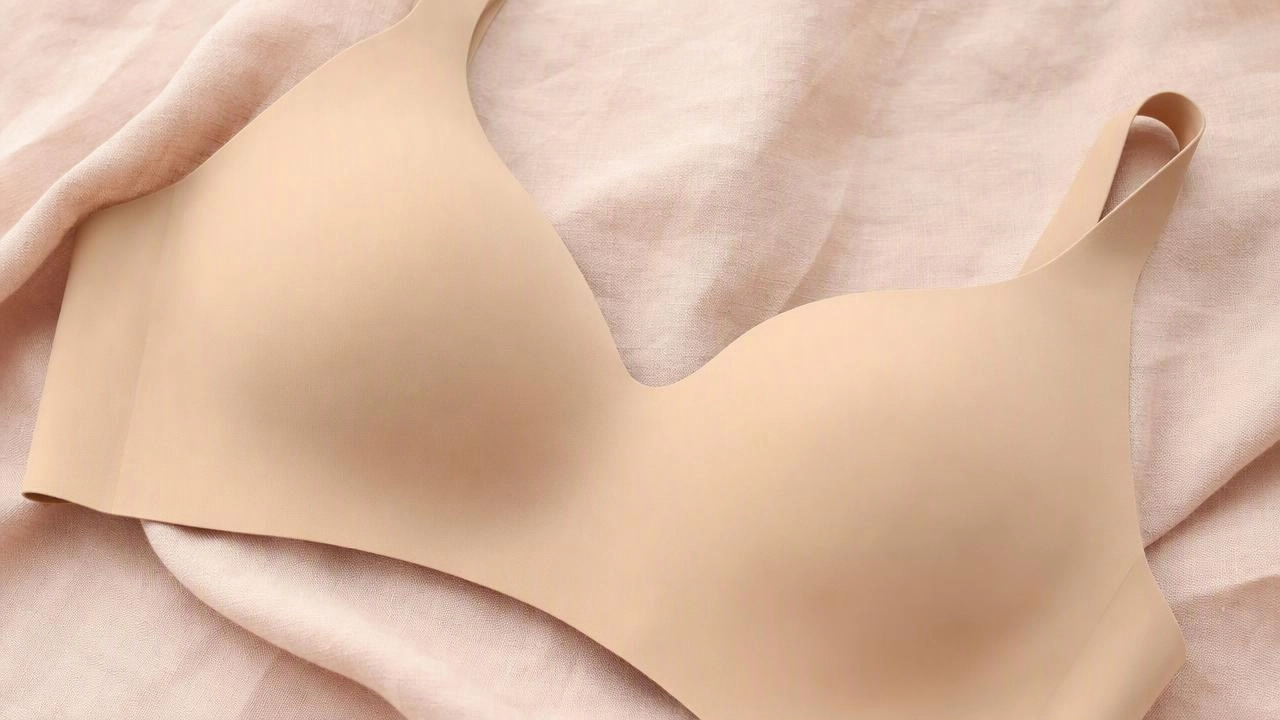
The Rise of Wireless Support Bras
Wireless support has become one of the most commercially significant shifts in lingerie manufacturing over the past decade. Consumers who once associated wire-free construction with limited support now expect comfortable structure without a rigid underwire. For brands and wholesalers, this creates an opportunity: a category that satisfies a genuine comfort demand while still delivering visible shaping.
Arc-support bras sit at the center of this shift. Instead of relying on a metal wire to define the underbust, an arc-support design uses curved support structures, engineered panel shapes and stabilized underbands to create lift and separation. The result is a bra that feels soft while still holding its shape. This guide explains how arc-support construction works, what materials it requires, how it is manufactured and how buyers can evaluate a program.
What Arc-Support Means in Construction
The term arc-support describes a support system built around a curved structural element rather than a traditional U-shaped wire. The "arc" may be created by a molded support panel, a curved bonding line, a rigid arc-shaped trim, or a combination of these. Whatever the method, the objective is the same: to define the underbust curve, anchor the cup, and keep the bra from collapsing or riding up.
How it differs from an underwire
A traditional underwire is a discrete metal or plastic component inserted into a casing. An arc-support structure is usually integrated into the garment during construction, either by molding, bonding or panel shaping. Because there is no separate wire to snap, poke or shift, the bra tends to feel softer against the ribcage while still providing a defined underbust curve.
How it differs from a soft cup
A simple soft cup bra relies mostly on the underband and fabric stretch for support. An arc-support bra adds a deliberate structure that changes the silhouette. That structure is what allows the bra to offer shaping without a wire, and it is also what makes the construction more technically demanding than a basic seamless bra.
The Engineering Behind Arc Support
Support in a wire-free bra comes from the interaction of several components. Understanding them helps a buyer ask the right questions.
Underband stability
The underband is the primary anchor. In an arc-support bra, the band is typically stabilized with a firm elastic, a bonded reinforcement or a laminated panel. If the band stretches too much, the whole support system fails, so band stability is the first specification to verify.
Arc structure
The curved support element distributes pressure across the underbust rather than concentrating it at two wire tips. This distribution is what makes arc support comfortable for long wear. The shape and stiffness of the arc must be tuned to the size range; a stiff arc that works on a medium cup may be uncomfortable on a larger one.
Cup shaping
The cup provides volume and coverage. In arc-support designs, cups are often molded or softly structured so that the lift comes from the combination of the arc and the cup shape rather than from a wire.
Wing and side panel design
Wings contribute to forward projection and side smoothing. A well-designed wing panel helps the bra hold the bust forward, which is a key part of the wire-free support story.
Materials for Arc-Support Bras
- Viscose and nylon blends: Common for soft support styles where smoothness and breathability matter.
- Firm power mesh: Used where additional stability is needed without bulk.
- Molded foam or spacer: Provides cup shape with a light, breathable feel.
- Reinforced elastic: The structural backbone of the underband.
- Bonding film and tape: Where the arc structure is created through bonding rather than a discrete component.
- Soft-touch hardware: Any rings, sliders or closures must be smooth, since wire-free bras are often worn for long periods.
Manufacturing an Arc-Support Bra
1. Design and structural analysis
Development begins by defining the support level required and translating it into a structural plan: where the arc sits, how the band is reinforced and how the cup is shaped.
2. Pattern and grading
Pattern making determines how the arc and the band behave across the size range. Because the arc is a structural element, grading errors show up as inconsistent support rather than just a fit variation, making careful grading especially important.
3. Material and lamination approval
Fabrics and reinforcement materials are tested for stretch, recovery and, where applicable, bonding compatibility.
4. Sample construction
The sample tests whether the structural plan works on the body. Reviewers assess lift, separation, underband stability, comfort at the arc contact points and overall silhouette.
5. Fit revision and approval
Adjustments are made to the arc shape, band tension and cup volume until the support target is met. The approved sample becomes the production standard.
6. Bulk production and inspection
Production follows the approved standard, with inspection focused on structural consistency: band tension, arc uniformity, cup symmetry and stretch recovery.
Quality Control for Arc-Support Construction
- Underband tension is consistent across units and within tolerance.
- The arc structure is symmetrical and retains its shape after stretching.
- No hard or sharp element can be felt at the underbust contact area.
- Cups are symmetrical and hold their shape after compression.
- Stretch recovery meets specification so the bra does not loosen during wear.
- Edge finishes are smooth and do not roll after washing.
Why Buyers Choose Arc Support
- Comfort without sacrificing shape: The core consumer appeal, and the main reason the category keeps growing.
- Broad wearer appeal: Suits customers who dislike wires but still want structure.
- Clean silhouette: Smooth underbust construction tends to sit flat under clothing.
- Strong marketing story: Wire-free support is easy to communicate and easy to demonstrate.
- Fit for everyday and travel: The comfort profile works across multiple use cases.
Design and Fit Considerations
Support level must be defined first
Before sampling, the buyer should state the intended support level. Light support suits casual and comfort-focused lines; medium support suits everyday wear; stronger support suits fuller-bust programs. The structural plan follows from that decision.
Size range affects the arc design
A single arc specification rarely works across a very wide size range. Where a program spans small to plus sizes, the arc and band often need size-specific tuning, which the sampling plan should account for.
Decoration must not compromise structure
Lace and trims can be added, but they must not interfere with the arc or the band. Decoration placed over a structural zone can change the way the support behaves.
Care and durability
Wire-free support relies on elastic and bonding performance, so care instructions should reflect the need for gentle washing and air drying to protect the structure.
Common Misunderstandings
- "Wire-free means no support." A well-engineered arc-support bra can provide meaningful lift and separation.
- "All seamless bras support the same way." Arc support is a specific structural approach, not a synonym for seamless.
- "One arc design fits every size." Structural elements need grading and tuning across the size curve.
- "Cheaper elastic will do." Band elastic quality directly determines support and lifespan.
Frequently Asked Questions
What is the difference between arc support and an underwire?
An underwire is a separate wire inserted into a casing and provides support from two curved tips. Arc support integrates the support structure into the garment, distributing pressure across a broader curved area. Arc support typically feels softer and avoids the poke risk associated with wires.
Are arc-support bras suitable for full-bust customers?
They can be, provided the band is stable, the arc is engineered for the load and the pattern is graded for the size range. A full-bust arc-support program needs firmer materials and careful sampling.
Can arc support be combined with seamless construction?
Yes. Many arc-support bras are also seamless, using bonding and lamination to build the structure without visible seams. This combination is popular in comfort-focused ranges.
How is arc-support quality verified before bulk production?
Through sample evaluation of lift, band tension, edge comfort and stretch recovery, followed by wash testing. Structural consistency should then be checked during bulk inspection.
Does arc support cost more than a standard soft cup?
Generally yes, because of the additional structural components, lamination and more demanding grading. The cost is balanced by the higher perceived value of a wire-free bra that still provides shaping.
How Arc Support Compares with Alternative Wire-Free Systems
Wire-free support is not a single technology. Several approaches exist, and understanding the differences helps a buyer specify the right one for a product brief.
Stretch-based support
This approach relies almost entirely on firm fabric, a strong underband and a well-graded pattern. It is the simplest and least expensive wire-free method, and it suits light support styling where comfort matters more than shaping. It offers little forward projection and limited separation.
Molded cup support
Here the support comes from a molded cup that holds a defined shape. It provides a smooth silhouette and predictable fit, and it is widely used in seamless programs. Its limitation is that a molded cup alone does not create much lift for a fuller bust.
Arc support
Arc support adds a curved structural element beneath the cup to define the underbust and anchor the cup. This produces more lift and separation than stretch-based or simple molded support while remaining wire-free. It sits between the two extremes in cost and complexity.
Sling or side-support panels
Some wire-free bras use an internal sling or a reinforced side panel to push the bust forward and inward. This is often combined with arc support for a stronger effect, particularly in fuller-bust designs.
For a buyer, the practical decision is to match the system to the required support level. Light support suits stretch-based or molded construction; medium support suits arc support; stronger support usually needs arc support combined with a sling or reinforced wings.
Specification Checklist for a Wire-Free Support Brief
Before requesting samples, a buyer can reduce development risk by confirming the following points in writing.
- Target support level: light, medium or strong, defined in terms the factory can engineer against.
- Size range: the full band and cup range the style must serve, including any plus sizes.
- Underband specification: elastic type, tension range and stretch recovery requirement.
- Arc or structure method: molded, bonded, inserted trim or panel-based.
- Cup construction: molded, cut-and-sewn or hybrid, with the desired cup edge finish.
- Wing design: side smoothing, forward projection and coverage expectations.
- Decoration limits: where lace or trim may be placed without disturbing the structure.
- Care requirements: washing and drying instructions the structure must survive.
- Inspection points: the measurable checks that will define acceptance.
When these points are agreed before sampling, the first sample is far more likely to land close to the target, and the number of revision rounds drops accordingly.
Evaluating an Arc-Support Program
A buyer evaluating an arc-support program should ask three questions: what support level the design targets, how the band and arc are specified, and how the pattern is graded across the size range. Answers to those questions separate a genuinely engineered wire-free bra from a soft cup with marketing language attached.
For brands building a comfort-led collection, arc support offers a way to serve wire-averse customers without abandoning structure. The category rewards buyers who define support requirements precisely and who invest in proper grading, and it tends to deliver strong repeat purchase rates because the comfort benefit is felt immediately by the wearer.
Plan Your Next Lingerie Collection
Share your product brief with our development team.