
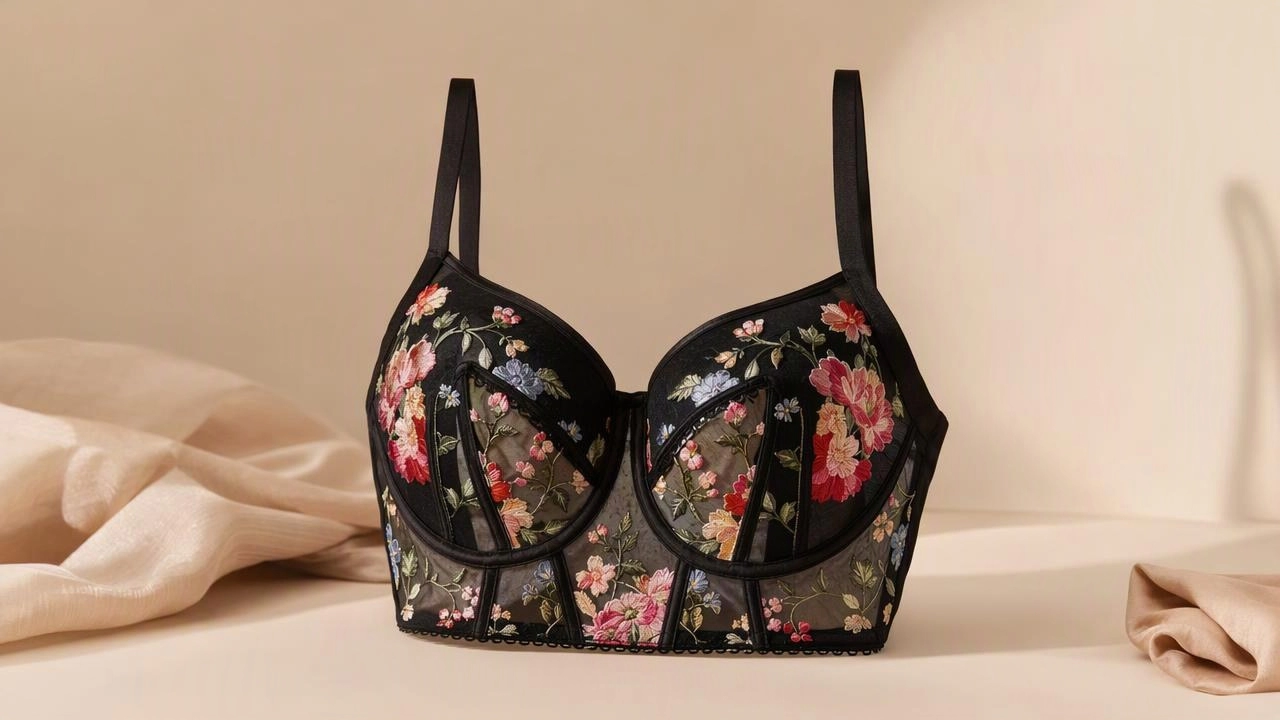
Why Bonded Seamless Is the Fastest-Growing Bra Construction
Bonded seamless bras have quietly become the default construction for a large share of the modern lingerie market. The reason is not fashion. It is a combination of consumer comfort expectations, retail margin structure and manufacturing efficiency that all point in the same direction. A bonded bra removes the traditional cut-and-sew seams around the cup and wing, replacing them with heat-sealed or ultrasonically bonded joins that lie flat against the skin.
For brands and wholesalers, the commercial significance is straightforward. A seamless bra is easy to wear, easy to photograph, easy to size and easy to explain. Those four qualities reduce returns, simplify marketing and shorten the customer's decision path. For a private label program, this makes the category an attractive anchor rather than an accessory. This guide explains the technology behind bonded seamless bras, the materials involved, the production process and the quality standards a buyer should demand.
What "Bonded Seamless" Actually Means
The phrase is used loosely in the market, so it is worth separating the components.
Seamless
Seamless refers to the absence of sewn seams on the visible outer surface, particularly around the cup and the front wing. The garment may still have seams at the side, the back or the shoulder strap attachment. A truly seamless front eliminates the lines that show through a fitted top, which is the main consumer benefit.
Bonded
Bonded refers to the joining method. Instead of stitching two pieces of fabric together, the factory applies heat, pressure and time, sometimes with an adhesive film or tape, to fuse the layers. The result is a join with no thread and no bulk, which is why bonded edges feel smooth even under tight clothing.
Why the two are usually combined
Seamless construction removes visible seams; bonding provides a way to join panels without reintroducing them. A bra can be seamless but not bonded, for example a circular-knit one-piece garment with no side seams at all. A bra can also be bonded but not fully seamless, for example a bonded trim on a sewn cup. Understanding the distinction helps a buyer specify exactly what the product needs to achieve.
Core Materials in Bonded Seamless Bras
The material set for a bonded program is narrower than for a traditional bra, because not every fabric can be bonded reliably.
- Viscose and modal blends: Popular for soft support styles because they feel cool and smooth. Viscose blends bond well and are widely used in seamless soft support bras.
- Nylon-spandex: Provides strength, recovery and a smooth hand. Commonly used where the bra needs to hold shape after repeated wear and washing.
- Polyester-spandex: Cost-effective and durable, with good color retention. Slightly less breathable than nylon or viscose blends.
- Adhesive film or bonding tape: The critical hidden material. Its activation temperature, thickness and elasticity determine whether the bond survives washing and wearing.
- Soft foam or spacer fabric: Used in the cup to give a light, breathable molded shape without a rigid structure.
- Elastic trim and edging: Often bonded rather than sewn to keep the edge flat and skin-friendly.
Because the bond quality depends on the fabric-adhesive-temperature combination, material substitution is far more disruptive in a bonded program than in a sewn program. A buyer who changes fabric after sampling should expect the bonding parameters to be re-validated.
How a Bonded Seamless Bra Is Manufactured
1. Fabric preparation and lamination
Fabric is inspected, relaxed and, where required, laminated to foam or a support layer. Lamination must be even; bubbles or inconsistent adhesive distribution become visible defects after bonding.
2. Cutting
Panels are cut to the pattern. Because bonded bras have fewer pieces, cutting accuracy has a larger effect on the final fit than in a multi-panel sewn bra. Any stretch or distortion at cutting carries directly into the bond line.
3. Bonding
The core process. Bonding machines apply controlled heat and pressure for a set dwell time. Parameters are developed per material combination and recorded as a production standard. Temperature too low produces a weak bond; too high scorches the fabric or creates a stiff, visible line.
4. Assembly
Bonded panels are joined to the remaining components: straps, closures, any sewn details. Even in a seamless bra, this stage may involve a small amount of sewing for the hook-and-eye or strap attachment.
5. Finishing and edge treatment
Edges are bonded, taped or laser-cut depending on the design. The goal is a clean edge that neither curls after washing nor irritates the skin.
6. Inspection and packing
Inspection focuses on bond integrity, edge finish, symmetry and stretch recovery. Because bonded defects may worsen after washing, a wash test on production samples is a valuable part of the protocol.
Fit and Comfort Engineering
Bonded seamless bras are often marketed on comfort, but comfort in this category is a technical outcome, not a marketing claim. Three engineering factors determine it.
Stretch direction and recovery
The fabric must stretch in the direction the body needs and recover to its original dimensions. Poor recovery causes the bra to loosen over a wear cycle and lose support. Buyers should ask for stretch and recovery values rather than relying on a feel test.
Underband stability
The underband is the primary support mechanism in a wire-free bra. In a bonded bra, the band is often shaped by lamination or a bonded elastic rather than a sewn elastic casing, so its stability depends on material engineering. A weak underband is the most common cause of a complaint about a seamless bra "riding up".
Edge finish
Bonded edges must be smooth and thin. A poorly finished edge can roll, dig in, or become visible through clothing, which defeats the purpose of the seamless design.
Quality Control Checklist for Seamless Bonded Programs
Beyond standard garment inspection, the following checks matter most in this category.
- Bond strength: the join should not delaminate under a defined peel or wash test.
- Wash durability: the bra should retain its bond and shape after repeated laundering.
- Edge quality: no curling, no stiff ridge, no visible bonding line on the outside.
- Stretch recovery: the garment returns to size after being stretched.
- Symmetry: left and right cups and wings match in shape and dimension.
- Color consistency: bonded joins should not show a shade difference.
- Skin safety: no adhesive bleed and no rough edge against the skin.
Why Brands Choose Bonded Seamless for Private Label
Several commercial factors make this construction attractive for a private label program.
- Lower perceived complexity: Fewer panels and fewer trims make the product easier to explain and merchandise.
- Strong comfort story: The seamless, wire-free proposition is simple and credible for consumers.
- Efficient production: Fewer sewing operations can mean faster assembly once bonding parameters are established.
- Consistent sizing: With a well-graded pattern, the seamless stretch accommodates wearers across a size range comfortably.
- Broad market fit: The category serves everyday wear, plus-size and travel segments without changing the core construction.
Development Considerations and Risks
Bonded programs are not risk-free. Buyers should plan for the following.
Material changes are expensive
Replacing a fabric means re-developing bonding parameters and re-testing wash durability. A late material change can invalidate a completed sample round.
Bond defects may appear late
A weak bond can pass a visual inspection and fail after several washes. Explicit wash testing before bulk approval is essential.
Size range and support level interact
A seamless soft support bra works well for small to medium cup sizes. For fuller busts, the construction needs stronger lamination and a more engineered underband, which changes cost and development time.
Decoration options are narrower
Lace, embroidery and heavy hardware are harder to integrate without reintroducing seams. This is why seamless bras tend to be visually minimal by nature.
Frequently Asked Questions
Is a bonded seamless bra the same as a wireless bra?
No. Seamless refers to construction and wireless refers to support method. A bra can be seamless and wired, or sewn and wireless. Many bonded seamless bras are also wireless, and some use a molded understructure, but the two terms describe different design decisions.
Do bonded seamless bras last as long as sewn bras?
With correct bonding parameters and appropriate care, a well-made bonded bra holds up well. Longevity depends on bond quality, fabric recovery and the washing conditions. Providing accurate care instructions is part of protecting the product's lifespan.
Can a bonded seamless bra be made in plus sizes?
Yes. Plus-size programs require firmer lamination, a stronger underband and a pattern graded for the target range. The construction works, but the material specification must be adjusted for the support requirement.
What is the minimum order quantity for seamless bras?
MOQ depends on the fabric minimums, the number of colors and the construction. Because bonded programs often use specialized materials, the fabric minimum can be the determining factor. Sharing the target style and quantity allows an accurate MOQ to be confirmed.
Can I add my own label to a bonded seamless bra?
Yes, private label programs commonly add care labels, woven labels and branded packaging. Because the construction is minimal, label placement should be planned early so it does not interfere with the smooth outer surface.
Specifying a Bonded Seamless Program
The most effective way to source a bonded seamless bra is to specify the outcome rather than the process. Tell the manufacturer what the product must achieve: the support level, the size range, the amount of visible edge, the intended care regime and the price position. From there, the factory can propose the right fabric, lamination and bonding parameters.
Buyers who begin with a clear brief and a willingness to test wash durability before bulk approval consistently get better results in this category. The construction rewards careful material decisions and punishes late changes, so the development discipline applied at the start determines whether the finished program delivers the comfort promise that made seamless bras worth sourcing in the first place.
Plan Your Next Lingerie Collection
Share your product brief with our development team.