
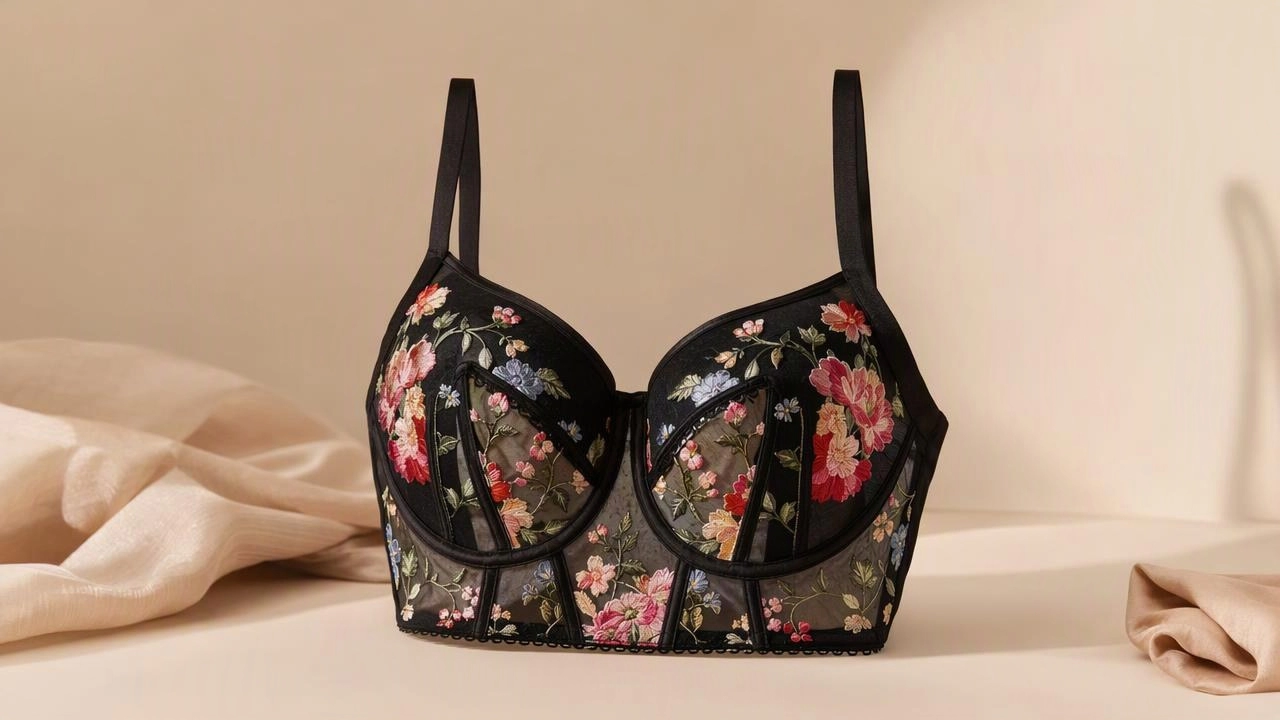
Why Corset Bras Have Become a Serious Sourcing Category
Corset bras have moved a long way from the costume aisle. For lingerie brands, the style now sits at the intersection of three commercially valuable trends: structured shaping, wearable outerwear, and high perceived value. A buyer who once treated a corset bra as a seasonal novelty now treats it as a core profit item, because the construction justifies a higher retail price while still fitting inside a normal size curve.
For wholesalers and private label brands, the appeal is practical. A corset bra occupies a defined niche that competes with neither basic T-shirt bras on price nor high-end fashion bustiers on exclusivity. It carries enough visual identity to anchor a collection, and enough technical structure to create a defensible reason for the manufacturer relationship. This guide walks through the manufacturing side of the category, from fabric and bones to sampling, quality control and bulk planning, so that a sourcing team can evaluate a program with real numbers rather than photographs.
What Defines a Corset Bra in Production Terms
In everyday language, "corset bra" covers everything from a lace bustier to a structured longline bra. On the factory floor, the term becomes more precise. Production teams usually classify a corset bra by four structural features, and each one changes the cost, the pattern and the sampling time.
Structure and support bones
A true corset bra carries vertical or spiral support bones in the wings and sometimes in the center front. These bones are not decorative. They hold the garment's shape against the body, prevent the fabric from rolling, and distribute pressure away from a single point. The number, length and placement of bones directly affect how the bra fits across sizes, so a supplier that cannot discuss bone layout at the quotation stage is unlikely to deliver a consistent bulk order.
Cup construction
Corset bras may use molded cups, cut-and-sewn cups, or a soft cup supported by the corset panels themselves. A molded cup gives a rounded, predictable shape and suits high-volume production. A cut-and-sewn cup allows more design freedom and better fit for fuller busts, but requires more skilled sewing. The choice is rarely aesthetic alone; it determines how forgiving the style is across a size range.
Closure and adjustability
Corset bras often use a combination of a back hook-and-eye closure and a front or side lace-up. The lace-up is a fit mechanism, not only a design motif, because it allows the wearer to adjust tightness. In manufacturing terms, this means more hardware, more assembly steps, and a longer quality inspection, which should all appear in the quotation.
Length and coverage
Longline and waist-length corset bras require additional panels below the underbust. Those panels add fabric consumption, add seams, and create a new set of fit questions around the ribcage and waist. A buyer who wants a longline silhouette should expect a longer development cycle than for a standard bra.
Key Materials for Corset Bra Production
Material selection drives both the hand feel and the durability of a corset bra. The categories below are the ones most often discussed during development.
- Base fabric: Nylon-spandex blends are common because they combine stretch, recovery and a smooth surface. Polyester-spandex is more economical and holds print well, but feels less soft against the skin.
- Lace and embroidery: Lace is usually a rigid or semi-stretch trim, while 3D floral embroidery is applied as a panel or motif. Embroidery adds weight and cost, and it must be positioned so it does not stiffen the cup edge or scratch the skin.
- Molded foam: Cup foam varies by density and thickness. A fuller-bust program needs firmer foam and a more engineered cup shape, while a fashion corset bra can use thinner foam for a lighter feel.
- Support bones: Spiral steel and plastic bones behave differently. Spiral steel follows the body curve and suits fuller-bust styles, while plastic bones are lighter and cheaper but can kink under load.
- Rigid tulle or power mesh: Often used in the wings and center front to add stability without bulk.
- Trims and hardware: Hook-and-eye tape, rings, sliders, decorative lacing and any metal components. Nickel-free options matter for markets with strict skin-contact rules.
The Step-by-Step Manufacturing Process
A corset bra program moves through predictable stages. Understanding the sequence helps a buyer plan launch timing realistically.
1. Brief and technical review
The process begins with a clear brief: target customer, size range, price position, and reference images or samples. A development team then reviews which constructions are feasible, which materials suit the brief, and which details will need to change for bulk production.
2. Material sourcing and approval
Once the brief is fixed, the factory sources candidate fabrics and trims. Buyers normally approve lab dips for color and hand feel for fabric before any pattern work advances. Skipping this step is one of the most common causes of a rejected first sample.
3. Pattern making and grading
Pattern makers build the base size and then grade the pattern across the size curve. Corset bras are less forgiving than simple bras because bones and panels must align at every size. A well-graded pattern keeps the bone positions consistent so the shaping effect does not disappear at the outer sizes.
4. Sampling and fit evaluation
The first sample turns the concept into a physical garment. Reviewers check cup shape, underband stability, bone placement, lace alignment, closure function and comfort. Comments should be consolidated into a single document so the factory can make one round of corrections rather than several disconnected changes.
5. Sample approval and specification lock
Once the sample is approved, it becomes the production standard. The approved sample, together with a written specification sheet, defines measurements, color, materials and inspection points. This document is the reference for every later dispute.
6. Bulk production
Production begins with cutting, then assembly, then finishing and packing. Corset bras take longer to assemble than simple bras because of the bones, the extra panels and the hardware, so the production plan should reflect that extra labor content.
7. Inspection and shipment
Inspection happens both during production and at final packing. A corset bra inspection should include measurement against the specification, bone integrity, symmetry of lace-up, closure strength and appearance. Shipment arrangements then depend on the agreed trade terms, quantity and destination.
Design Considerations Buyers Should Raise Early
Several design details are cheap to change at the sampling stage and expensive to change after bulk approval. Raising them early protects the timeline.
- Wearability as outerwear: If the corset bra is intended to be worn alone, the back closure and inner seams must look finished, which changes construction.
- Skin discomfort from bones: Bone tips must be encased and finished; exposed or poorly finished tips cause returns.
- Visual balance of embroidery: Large embroidery motifs can distort a small cup and overwhelm a large one; motif scale should be adjusted by size.
- Color consistency across panels: When lace, embroidery, base fabric and trims come from different suppliers, color matching becomes a real project risk.
- Care instructions: Corset bras generally require gentle hand washing; this should match the care label and the brand's customer expectations.
Quality Control Points Specific to Corset Bras
A generic bra inspection checklist is not enough for this category. Specific points to verify include:
- Bone channels are fully stitched and no bone tip can be felt through the fabric.
- Left and right wings are symmetrical in bone position and length.
- The lace-up cord is correctly threaded and of the specified length and strength.
- Molded or sewn cups are symmetrical and free of wrinkles at the edge.
- Underband stretch and recovery fall within the approved tolerance.
- Hardware passes a pull test appropriate to the design.
- Color matches the approved standard under consistent lighting.
Cost Drivers in Corset Bra Manufacturing
Buyers comparing quotations sometimes compare numbers that were never equivalent. The real cost drivers in a corset bra are:
- Bone quantity and type: Spiral steel and multiple bones raise cost and labor.
- Embroidery and lace coverage: Applied decoration is usually the single largest material cost.
- Cup construction: Cut-and-sewn and heavily molded cups cost more than simple soft cups.
- Panel count: More panels mean more seams, more sewing time and a higher chance of fit variation.
- Hardware: Decorative lacing, metal rings and premium closures add up quickly.
- Order quantity and color count: Small runs and many colors dilute efficiency and raise unit cost.
This is why a quotation without a specification is not comparable. Two corset bras can look identical in a photo while differing by a factor of two in material and labor content.
How Corset Bras Fit Into a Private Label Collection
From a merchandising perspective, a corset bra earns its place in a collection when it does at least one of three jobs: it raises the average selling price, it creates a signature look for campaign imagery, or it attracts a customer segment that the core range misses. In many private label programs, a small number of corset bras sits alongside a large run of seamless basics, with the basics carrying volume and the corset bras carrying margin and identity.
This mixed approach also helps with development risk. A brand can invest its sampling budget in two or three corset styles while keeping a familiar seamless program as the commercial anchor. Buyers new to the category often start with a lace-up corset bra in a small size range and expand only after sell-through data is available.
Common Mistakes to Avoid
- Approving a sample on appearance only, without checking fit across the full size range.
- Changing bones or cup construction after the pattern is graded, which invalidates prior fit work.
- Ordering many colors in a first run, which multiplies sampling and quality risk.
- Assuming a photo reference is a specification; without a tech pack, the factory must guess.
- Comparing quotations from suppliers who used different materials.
- Leaving packaging and labeling decisions until after bulk production starts.
Frequently Asked Questions
What is the minimum order quantity for a corset bra?
MOQ depends on the construction, the number of colors and the materials used. Corset bras typically require a higher starting quantity than simple bras because of the additional labor and hardware. The practical way to establish an accurate MOQ is to share the target style and quantity so the factory can confirm against real material minimums.
How long does it take to develop a corset bra from brief to bulk?
A full development cycle includes brief review, material approval, pattern making, sampling, fit revision and approval. Because a corset bra carries more components than a basic bra, the cycle tends to run longer, and the exact duration depends on how many sample rounds the design requires and how quickly the buyer provides comments.
Can a corset bra be made without steel bones?
Yes. Plastic or composite bones can replace steel for lighter styles, and some designs rely on power mesh and panel shaping instead of bones. The trade-off is that a bone-free version usually offers less structure and a softer silhouette, which may or may not suit the target customer.
Is a corset bra suitable for a fuller bust?
A corset bra can support a fuller bust well when the cup is engineered correctly, the underband is stable and the bone layout distributes load. The critical requirement is that the pattern is graded for the actual size range rather than simply scaled up from a smaller base.
What should be included in a corset bra tech pack?
A useful tech pack includes construction drawings, measurements for the base size, the graded size curve, material and trim specifications, color references, label and packaging placement, and a list of inspection points. The clearer the tech pack, the fewer sample rounds are required.
Getting a Useful Quotation
A corset bra program is easiest to quote when the buyer supplies four things: a clear product reference, the target size range and quantity, the desired colors, and the customization and packaging requirements. With those inputs, a manufacturer can separate the technical questions from the commercial ones and return a quotation that reflects the real project rather than a generic price list.
For buyers building a new collection, the most efficient path is to start with one or two corset styles, validate the fit and the sell-through, and expand the program once the construction is proven. This keeps sampling costs controlled while still giving the collection the distinctive, high-margin pieces that a corset bra is uniquely able to provide.
Plan Your Next Lingerie Collection
Share your product brief with our development team.