
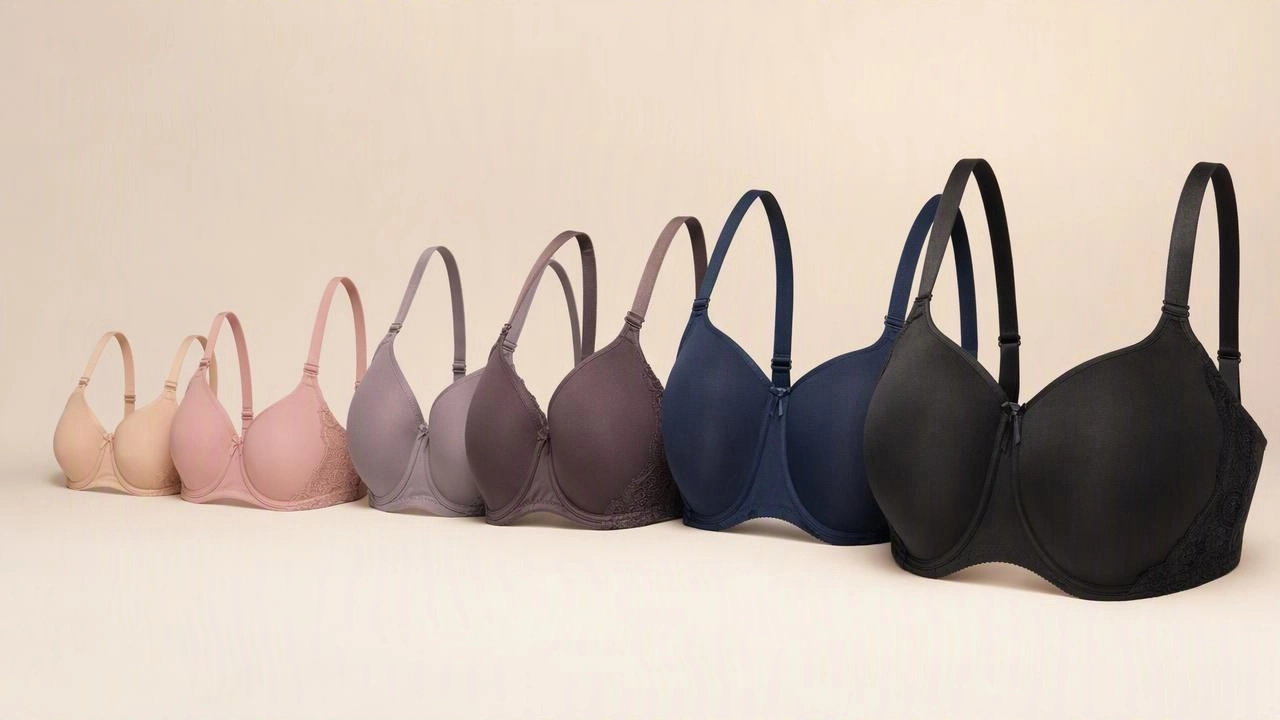
Why Inspection Is the Buyer's Most Important Protection
Quality inspection is the point at which a lingerie program is either confirmed or exposed. Up to that moment, everything is a sample, an expectation or a specification. Inspection is where the actual goods are measured against the agreed standard, and it is the buyer's single most effective protection against receiving a shipment that does not match what was ordered.
For brands and wholesalers, a structured inspection protocol reduces returns, protects the brand's reputation and provides an objective basis for resolving disputes. Lingerie inspection is more detailed than most apparel inspection because of the number of small components, the importance of stretch and recovery, and the fact that fit problems are often invisible in a photograph. This guide provides a practical inspection checklist and explains how to use it.
Inspection Stages: Where Each Check Belongs
Quality control is more effective when checks are placed at the right stages rather than concentrated at the end.
Incoming material inspection
Fabric, lace, elastic and foam are checked on receipt for color, width, stretch, hand feel and defects. Material defects that pass into production become garment defects that are far more expensive to fix.
In-line inspection
Checks during production catch systematic errors early, before an entire batch is affected. Common in-line checks include seam integrity, stitch density, component placement and bonding parameters.
Molded and structural component inspection
Molded cups, bones and structural panels are inspected before assembly, since defects in these components cannot be corrected later.
Final inspection
Finished garments are inspected against the specification before packing. This is the check most buyers think of when they discuss inspection, but it should be the last layer rather than the only one.
Pre-shipment inspection
A final review after packing verifies quantity, carton marking and packing correctness.
The Lingerie Inspection Checklist
The following points cover the majority of issues that matter in a lingerie program.
Measurement and fit
- Key measurements match the approved specification within tolerance.
- Band length and stretch fall within the approved range.
- Cup dimensions and volume match the specification.
- Strap length and adjustability are within range.
- Measurements are consistent across the inspected units.
Workmanship
- Stitching is straight, secure and free of skipped or loose stitches.
- Seams are flat and do not pucker or twist.
- Bonded joins are secure, even and free of delamination.
- Edges are clean and free of curling or fraying.
- Trims, bows and decorative elements are securely attached.
Components and hardware
- Hook-and-eye closures function correctly and pass a pull test.
- Rings, sliders and other metal components are secure and skin-safe.
- Bones are fully encased and no bone tip can be felt through the fabric.
- Elastic tension is consistent across units.
Appearance
- Color matches the approved standard under consistent lighting.
- No shade variation between panels, cups or components.
- No stains, marks, pulls or fabric damage.
- Left and right sides are symmetrical.
Labels and packing
- Care and content labels are correct and correctly placed.
- Woven labels, hang tags and price tickets match the approved artwork.
- Folding and packing match the approved method.
- Carton markings, quantities and assortments are correct.
Stretch and Recovery: The Lingerie-Specific Test
Stretch and recovery deserve separate emphasis because they are the most lingerie-specific quality factors and the most frequently overlooked.
Why it matters
A bra that stretches correctly but recovers poorly will loosen over a wear cycle and lose support. This defect is invisible in a static inspection and only appears when the garment is worn or washed.
How to verify
The supplier should be able to report stretch and recovery values for the band and cup materials, and to test them on finished garments. Buyers should require a wash test on production-representative samples before bulk approval.
What to specify
Instead of a vague requirement, specify the band stretch percentage, the recovery requirement and the number of wash cycles the garment must survive while remaining within tolerance. Specific, measurable requirements are enforceable; vague standards are not.
Handling Non-Conformity
Even with good inspection, some issues will arise. How they are handled determines the cost of the problem.
Classify the defect
- Critical: safety issues or defects that make the garment unusable.
- Major: visible defects that would cause a customer to return the product.
- Minor: small deviations that do not affect function or appearance significantly.
Agree the response in advance
Before production, agree how each class of defect will be handled: rework, replacement, price adjustment or rejection. Having this agreed in advance turns a potential dispute into a procedure.
Document with evidence
Photographs, measurements and sample references make the discussion objective. Without them, quality discussions become matters of opinion.
Building an Inspection Protocol That Works
- Define acceptance criteria before production: measurable tolerances, not adjectives.
- Reference the approved sample: keep a sealed counter sample as the physical standard.
- Set the inspection levels: agree sample size and acceptable defect rates.
- Inspect at multiple stages: material, in-line, component and final.
- Include wash testing: especially for bonded, seamless and molded products.
- Keep records: inspection reports from each order support future quality conversations.
Frequently Asked Questions
What is the acceptable quality level for lingerie inspection?
Acceptable defect rates depend on the product and the brand's standard, and they should be agreed in advance. The important principle is that criteria should be measurable and consistent, so the same standard applies to every order.
Should I visit the factory or use a third-party inspection?
Both approaches have value. Factory inspection allows faster feedback and better understanding of the process, while third-party inspection provides independent verification. For a first order, many buyers use both.
How do I inspect stretch and recovery?
Ask the supplier to report measured stretch and recovery values, then verify with a wash test on finished samples. Specify the number of wash cycles and the tolerance the garment must remain within.
What are the most common defects in lingerie?
Measurement deviation, inconsistent elastic tension, color variation between panels, loose or poorly finished edge, and component failures. Stretch recovery problems are also common but harder to detect without wash testing.
What should happen if a shipment fails inspection?
The response should follow the defect classification agreed before production. Critical and major defects may require rework, replacement or rejection, while minor deviations may be resolved by mutual agreement. Documenting the issue with evidence keeps the resolution objective.
Preparing for Inspection: What the Buyer Must Supply
Inspection works best when the buyer provides the reference materials that make objective comparison possible. Without them, the inspector has no standard to measure against.
- Approved sample: a sealed, labeled counter sample that represents the agreed quality.
- Specification sheet: measurements with tolerances for each size in the range.
- Material references: the approved fabric, lace and foam, with color standards.
- Trim and label artwork: approved designs and placements for all branding elements.
- Packing instructions: folding method, poly bag, tag attachment and carton packing.
- Defect classification: the agreed definition of critical, major and minor defects.
- Inspection level: the sample size and acceptable quality level for the order.
Providing these items before production begins eliminates most of the ambiguity that turns a quality issue into a dispute. A supplier working to a clear standard produces more consistent results, and a buyer with a clear standard can evaluate results confidently.
Common Inspection Pitfalls
- Inspecting only at the end: defects found after assembly are the most expensive to correct.
- Using adjectives instead of tolerances: "good stretch" is not measurable; a stretch percentage is.
- Omitting wash testing: bonded, seamless and molded products can pass a static check and fail after laundering.
- Checking only one size: problems often appear at the extremes of the size curve.
- Ignoring packing: a perfect garment in incorrect packing still creates customer complaints.
- No record keeping: without inspection records, quality discussions cannot reference past performance.
- Skipping the counter sample: without a physical standard, appearance judgments become subjective.
Sampling Inspection Levels and Sample Size
Inspection is a sampling exercise, not a full check of every unit. Deciding how many units to inspect balances confidence against cost.
- Critical defects: even a very low rate is unacceptable, because these are safety or usability issues. Any critical defect found should trigger investigation of the whole batch.
- Major defects: these drive the acceptable quality level. The agreed rate determines whether a batch is accepted.
- Minor defects: tolerated within a defined limit, since eliminating every minor deviation is not commercially realistic.
- Inspection intensity: new suppliers and new constructions warrant a larger sample; established suppliers with a consistent record can be inspected more lightly.
The important principle is that the inspection level is agreed in advance and applied consistently. Changing the standard after a defect is found turns inspection into a negotiation rather than a check.
Third-Party Inspection versus In-House Inspection
Buyers have two main options for inspection, and many use both.
Factory in-house inspection
Faster and cheaper, with the advantage of catching issues during production when correction is still inexpensive. Its limitation is the obvious one: the producer is checking its own work.
Buyer or agent inspection
A buyer representative or sourcing agent inspects on the buyer's behalf, providing a degree of independence while retaining the ability to give feedback quickly.
Third-party inspection agency
An independent agency applies a defined standard and issues a report. This provides the strongest evidence base for a dispute and is common for a first order or a new supplier.
Choosing between them
For a first order with a new supplier, third-party inspection at final stage plus factory in-line checks is a sensible combination. For repeat orders with a proven supplier, in-house inspection with occasional third-party audits may be sufficient.
Inspection as a Partnership
The most effective quality relationships treat inspection as a shared standard rather than an adversarial test. A supplier that knows exactly what will be checked, and that has agreed the tolerances and the defect response in advance, has every incentive to meet the standard consistently.
Buyers who define acceptance criteria clearly, inspect at multiple stages, insist on wash testing where construction demands it, and keep good records will consistently receive better goods. Inspection is not only a way to catch problems; it is a way to communicate expectations so precisely that fewer problems occur in the first place.
Plan Your Next Lingerie Collection
Share your product brief with our development team.