
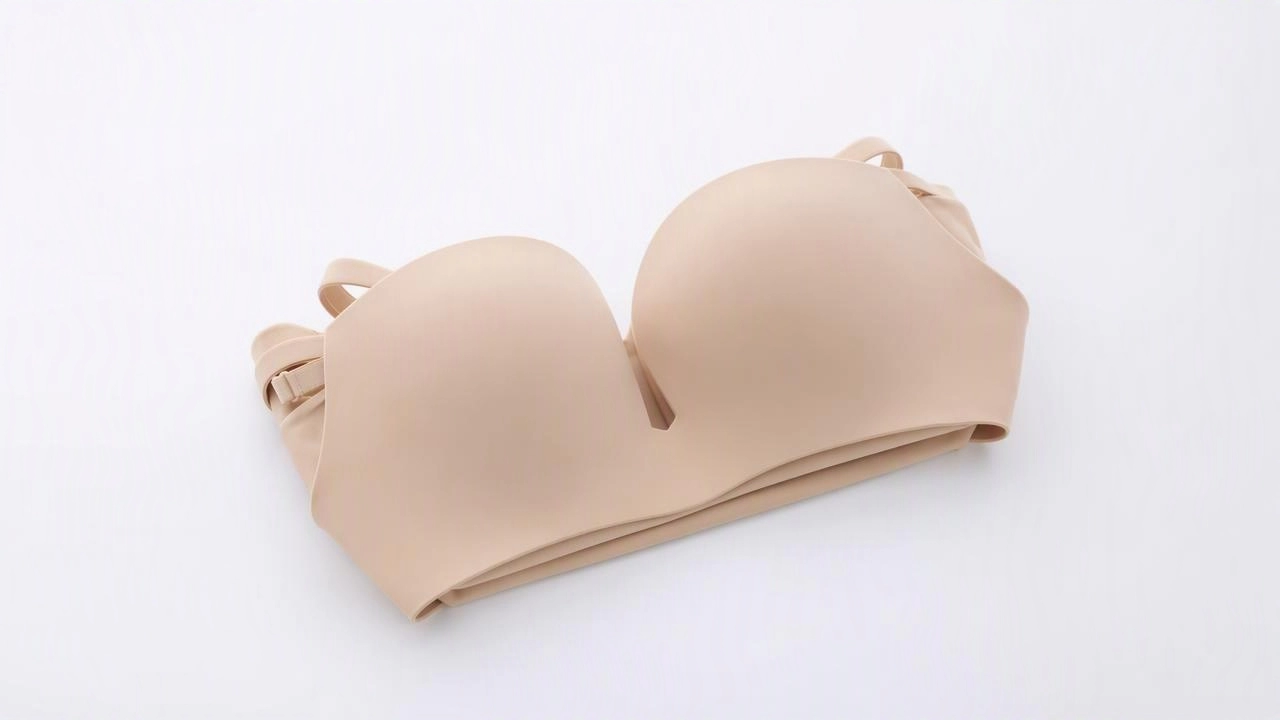
What One-Piece Seamless Really Means for Production
One-piece seamless bras are among the most technically interesting products in modern lingerie manufacturing. The term describes a bra whose main body is produced as a continuous piece rather than assembled from a stack of cut panels. For the consumer, the benefit is an almost weightless feel with no seams to press against the skin. For the manufacturer, the benefit is fewer assembly steps and a more consistent result once the process is established.
For buyers and private label programs, one-piece construction offers a strong comfort proposition that is easy to communicate and increasingly expected by customers who have grown used to seamless apparel in other categories. This guide traces the production route from yarn through knitting, finishing and inspection, and explains what buyers should verify before committing to bulk.
The Two Main Production Routes
One-piece seamless bras are generally produced by one of two routes, and the choice affects cost, capability and design freedom.
Circular knitting
Circular knitting machines produce a tube of fabric that can be shaped into a garment with little or no side seaming. This route is efficient for stretch-based, wire-free styles and for soft support bras. Design detail is limited compared with a cut-and-sewn product, but the smoothness and comfort are excellent.
Flat-knit or warp-knit forming
More sophisticated machines can knit a shaped panel directly, including zones of different stretch. This route supports better shaping and a more refined fit, and it is often used for one-piece styles that need defined cup areas. Tooling and development cost are higher.
Both routes share the same advantage: the garment's main body is formed rather than assembled, which removes a large number of sewing operations and the seam-related fit problems that come with them.
From Yarn to Finished Garment
1. Yarn selection
Yarn choice determines stretch, softness and recovery. Common choices include nylon with spandex, polyester with spandex, and viscose blends for a cooler hand feel. The yarn specification must match the support level the finished bra is meant to deliver.
2. Knitting
Machines knit the garment tube or shaped panel to a programmed specification. Stitch density, elastic content and zone placement are set at this stage. Because knitting creates the shape, any programming error becomes a fit error rather than a sewing defect.
3. Dyeing and finishing
Garments or fabric are dyed to the approved color, then finished to set the dimensions and hand feel. Dyed-to-shape programs require careful control because the forming has already happened; shade consistency and dimensional stability must both be verified.
4. Trimming and edge treatment
Laser cutting or bonded finishing is used to create clean edges. This stage determines whether the bra achieves its characteristic smooth profile.
5. Component attachment
Straps, closures and any decorative elements are attached. Even in a one-piece bra, some attachment work remains, and it must not compromise the smooth body.
6. Inspection and packing
Inspection verifies dimensions, stretch recovery, edge quality, color and appearance.
Why Knitting Parameters Matter So Much
In a cut-and-sewn bra, the pattern controls the shape. In a one-piece knitted bra, the knitting program controls it. That shift changes where quality problems originate.
Stitch density
Denser knitting gives more support and a firmer hand; looser knitting gives more stretch and breathability. The correct setting depends on the intended support level.
Zoned elastic
Advanced one-piece programs knit different elastic content into different zones, so the underbust is firmer while the cup area is softer. This zoning is a key competitive advantage of the construction.
Dimensional stability
Because the garment is formed before dyeing, dimensional changes during finishing must be tightly controlled. A drift in dimensions shows up directly as a fit problem.
Quality Control for One-Piece Seamless Bras
- Finished dimensions match the approved specification after finishing.
- Stretch and recovery are consistent across units.
- Edges are clean, flat and free of curling.
- Zoned support areas are positioned correctly on the finished garment.
- Color is uniform, with no variation between zones.
- Attached components pass pull tests.
- No yarn defects, holes or thin areas in the knit.
Design Freedom and Its Limits
One-piece seamless construction is not suitable for every design. Buyers should understand its boundaries before choosing it.
What works well
- Everyday and comfort bras
- Wire-free soft support styles
- Plus-size comfort programs
- Travel and loungewear collections
- Multi-pack and basic ranges
What is more difficult
- Heavy lace and embroidery, which generally require a sewn or bonded overlay
- Complex hardware and dramatic shaping
- Highly structured corset-style silhouettes
- Very fine fit distinctions across a broad cup range
Where decoration is required, it is usually applied as a bonded or sewn overlay on the base knit. This preserves the comfort of the body while adding visual interest.
Cost Structure and Efficiency
One-piece construction changes the cost profile of a bra in several ways.
- Lower assembly labor: fewer sewing operations reduce per-unit labor content.
- Higher development cost: knitting programs and tooling are more expensive to establish.
- Material efficiency: forming the garment can reduce cutting waste.
- Minimum quantity pressure: machine setup favors larger runs, so MOQ can be higher than for simple sewn styles.
- Quality consistency: once parameters are set, unit-to-unit consistency is typically high.
For a program with steady volume, the efficiency gains usually outweigh the higher setup cost. For a small experimental run, a cut-and-sewn or bonded alternative may be more economical.
Frequently Asked Questions
Is a one-piece seamless bra the same as a seamless bra?
One-piece seamless is a specific type of seamless construction in which the main body is formed as a single piece. A seamless bra may also be made by bonding panels together. Both achieve a smooth surface, but the production methods differ.
Do one-piece seamless bras provide enough support?
For light to medium support, yes, especially where zoned knitting or lamination adds structure to the underband. For stronger support, additional engineering is needed and a hybrid construction may be preferable.
Can one-piece seamless bras be made in plus sizes?
Yes, and the construction is well suited to plus-size comfort ranges. The knitting program must be adjusted for larger dimensions and firmer support, so a plus-size extension is not simply a scaled version of a smaller size.
Why are minimum order quantities often higher for one-piece bras?
Because the knitting program and machine setup are fixed costs that are spread across the run. Larger quantities make the setup efficient, so suppliers often set a higher minimum.
How do I verify quality before bulk production?
Approve a counter sample, test stretch recovery and dimensional stability after washing, and confirm that zoned support areas are positioned correctly. Then agree inspection criteria with measurable tolerances.
Comparing One-Piece Seamless with Bonded Seamless
Buyers often treat one-piece seamless and bonded seamless as interchangeable ways to achieve a smooth bra. In production terms they are quite different, and the choice affects development cost, flexibility and minimum quantity.
How the garment is formed
In a one-piece program, the main body is knitted to shape, so the form exists before assembly. In a bonded program, panels of laminated fabric are cut and then fused together. One-piece construction depends on knitting machinery and programming; bonded construction depends on bonding machinery and parameter control.
Design flexibility
Bonded programs accept laminated foam, spacer fabric and a wider range of overlays, so they support more cup shaping and decoration. One-piece programs are strongest where stretch and simplicity define the product, and decoration is usually added as an overlay afterward.
Development and minimum quantity
One-piece programs carry higher setup costs because knitting programs and tooling must be established, which tends to push minimum quantities higher. Bonded programs have lower setup barriers and are more accessible for smaller or experimental runs.
Fit characteristics
A one-piece bra fits through its knit stretch, which feels light and forgiving. A bonded bra fits through the combination of laminate stiffness and band tension, which can deliver a more defined shape. Which is preferable depends on whether the target customer values weightlessness or shaping more.
For a brand entering the comfort category, the practical path is often to begin with a bonded program, validate the market, and then move to a one-piece construction once volume justifies the setup investment.
Washing, Care and Long-Term Performance
One-piece seamless bras are marketed on comfort, but their long-term reputation depends on how they survive repeated wear and washing. Several factors determine that.
- Yarn recovery: the knit must return to its original dimensions after stretching. Poor recovery causes gradual loosening.
- Edge stability: laser-cut or bonded edges must not curl or fray over time.
- Dimensional stability: the garment should not shrink or grow after the first few washes.
- Color retention: dye must hold through the expected number of washes.
- Component durability: straps and closures should remain secure even though they are minor parts of the garment.
Buyers should require a wash test on production-representative samples before bulk approval, evaluated after a defined number of cycles. Because defects in knitted garments can appear gradually rather than immediately, a single wash test is rarely sufficient evidence of durability.
Sourcing a One-Piece Seamless Program
A successful one-piece seamless program begins with a clear statement of the support level and the size range, because both directly shape the knitting specification. Buyers should also confirm the development cost and minimum quantity at the outset, since these are higher than for a simple sewn style and can affect whether the construction is the right commercial choice.
Where the product brief calls for maximum comfort, minimal seams and a strong everyday-wear proposition, one-piece seamless construction is difficult to beat. It rewards buyers who plan carefully, and it gives brands a product that is genuinely differentiated on feel rather than appearance, which is a durable advantage in a crowded lingerie market.
Plan Your Next Lingerie Collection
Share your product brief with our development team.