
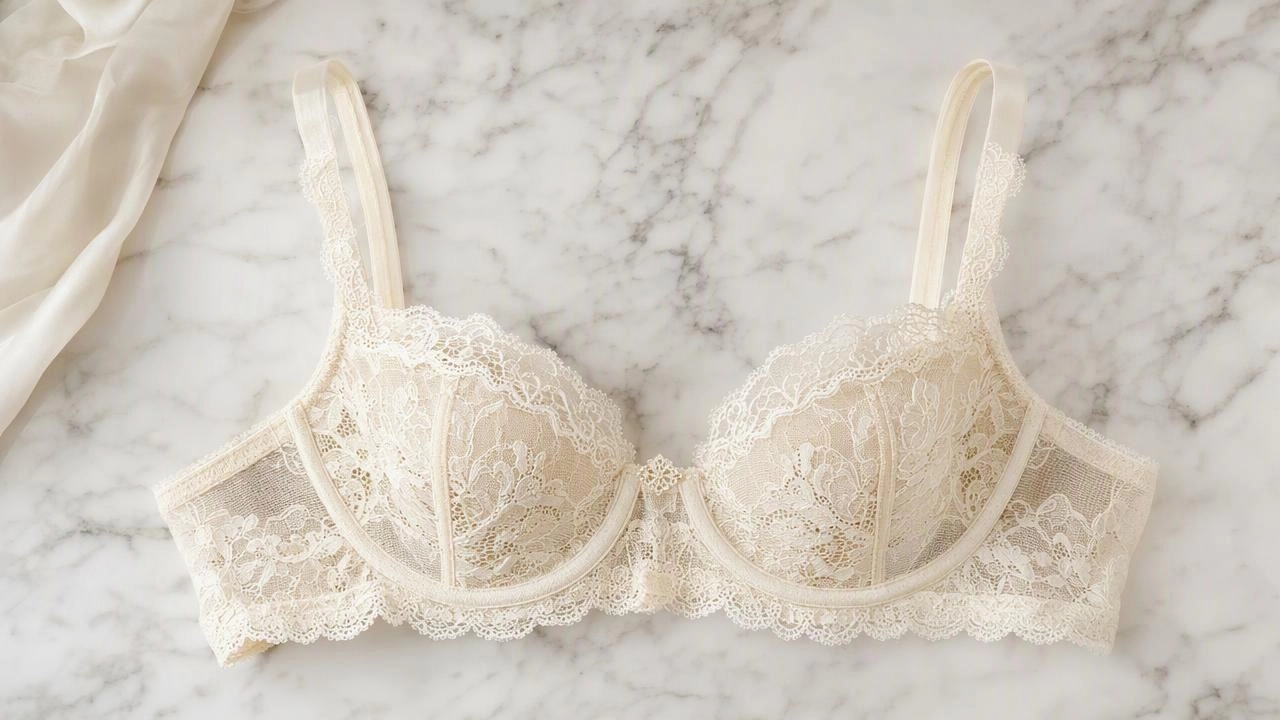
The Commercial Case for Smooth Bras
Smooth bras are easy to underestimate. They lack the drama of a lace corset bra and the technical novelty of a bonded seamless program, yet they consistently generate the highest volume in most lingerie businesses. The reason is functional: a smooth bra disappears under clothing, feels comfortable for long wear, and suits almost every customer segment.
For brands and wholesalers, smooth bra manufacturing is an exercise in consistency. Because the product is visually simple, any variation in molding, material or finishing is immediately visible. A smooth bra that fits well and holds its shape becomes a repeat-purchase staple; one that wrinkles or loses recovery becomes a return. This guide explains how smooth bras are made, what materials and processes matter, and how buyers should evaluate a program.
What Makes a Bra "Smooth"
Smooth describes the surface and the finish rather than the support level. A smooth bra presents an even, uninterrupted surface under clothing, which usually means molded cups, bonded or flat seams, and soft, low-profile trims.
Surface finish
The outer surface must be free of ridges, lace texture and bulky seams. This is why smooth bras tend to use molded cups and bonded or taped edges rather than sewn-on decoration.
Seam behavior
Where seams exist, they must be flat and unobtrusive. Many smooth bras eliminate the front seams entirely by using a single molded cup piece for both sides or a bonded construction.
Trim profile
Straps, closures and elastics must sit flat. A smooth bra can be undermined by a bulky hook-and-eye or a stiff strap that shows through a fitted top.
Materials in Smooth Bra Production
- Nylon-spandex: A common base for smooth bras because it offers a soft hand, good recovery and a clean surface.
- Polyester-spandex: Durable and cost-effective, with excellent color retention for solid-color programs.
- Viscose blends: Used in soft support smooth styles for a cool, breathable feel.
- Molded foam and spacer fabric: Provide cup shape with a light, breathable profile.
- Microfiber: A fine-gauge fabric that contributes to the smooth surface and soft touch.
- Bonding film and tape: Where seams and edges are joined without stitching.
- Low-profile elastic and hardware: Smooth edges and flat closures.
The Smooth Bra Manufacturing Process
1. Product definition
The process begins with the intended function: everyday wear, invisibility under clothing, light shaping or soft support. The function determines the cup construction and the finish level.
2. Fabric and foam selection
Materials are chosen for surface quality, recovery and moldability. Because the visual result depends on the surface, fabric quality is more visible in this category than in many others.
3. Cup molding
Molded cups are formed by applying heat and pressure to foam or laminated fabric over a shaped mold. Molding temperature, dwell time and cooling affect whether the cup holds its shape or relaxes over time.
4. Cutting and assembly
Panels are cut and assembled with flat or bonded joins. Assembly accuracy determines whether the bra sits smoothly on the body.
5. Finishing
Edges are bonded, taped or laser-cut, and trims are attached. Finishing is where most visible smoothness problems are either solved or created.
6. Inspection and packing
Inspection focuses on surface quality, molding consistency, edge finish and symmetry.
Molding: The Critical Process Step
Molding deserves separate attention because it is the step that most affects how a smooth bra looks on the body.
Shape retention
A well-molded cup keeps its shape through wear and washing. If the molding conditions are wrong, the cup can relax and flatten, which is immediately visible under clothing.
Surface uniformity
Molding must produce an even surface without dimples, marks or thinning. Thin spots can become visible blemishes or weak points.
Consistency across units
Because molding is a machine process, consistency depends on controlled parameters and regular checks. Buyers should expect the factory to record molding standards and to inspect molded cups before assembly.
Quality Control for Smooth Bras
- Cup surface is smooth and free of dimples, wrinkles or marks.
- Left and right cups are symmetrical in shape and volume.
- Edges are flat and do not roll after washing.
- Seams, where present, are flat and do not show through a fitted garment.
- Stretch and recovery meet the approved specification.
- Trims and hardware sit flat and are skin-safe.
- Molding shape is consistent across the inspected batch.
Positioning a Smooth Bra in a Collection
As the volume driver
A smooth bra in core colors frequently becomes the highest-volume style in a range. It appeals to customers buying for everyday wear and to those who need invisibility under work clothing.
As a price ladder anchor
A well-made smooth bra can support a mid-premium price when the molding and material quality are visibly better than a basic alternative. This makes it a useful anchor for the collection's price structure.
As a cross-sell
Smooth bras pair naturally with shapewear, sleepwear and multi-pack propositions, which makes them effective for basket-building.
As a comfort-led entry point
For customers new to a brand, a smooth wire-free or soft support bra is a low-risk first purchase that can lead to later purchases in other categories.
Design Considerations
Invisibility requires discipline
Every component must be chosen with the end use in mind. A smooth cup with a bulky closure is not truly invisible, so the whole product has to be designed around the objective.
Support level versus smoothness
Adding structure for support can add thickness or seams, which works against smoothness. Buyers should decide which benefit takes priority for the target customer.
Color and shade consistency
On a plain surface, any shade variation between panels becomes noticeable. Solid-color smooth programs require tight color control at every material source.
Care and longevity
Smooth bras benefit from gentle washing and air drying to protect molding and bonding. Care labeling should reflect this.
Cost Drivers
- Molding quality and tooling: Better molds and tighter process control cost more but improve consistency.
- Foam and fabric grade: Surface quality depends on raw material, so downgrading material is visible.
- Bonding versus sewing: Bonded construction reduces bulk but requires reliable bonding parameters.
- Size range and color count: Broad ranges and many colors raise unit cost.
- Inspection strictness: Smooth products show defects easily, so inspection intensity affects cost.
Common Problems and How to Prevent Them
- Wrinkled cups after washing: Usually a molding or foam quality issue; verify molding standards and run wash tests.
- Visible edge lines: Caused by bulky finishing; specify bonded or laser-cut edges.
- Shade variation between panels: A material control problem; approve all components against a single standard.
- Loss of support over time: Often a recovery issue; check fabric and elastic specifications.
- Straps that show through clothing: Use low-profile straps or bonded finishes.
Frequently Asked Questions
Is a smooth bra the same as a seamless bra?
They overlap but are not identical. A seamless bra has no visible seams, while a smooth bra presents a smooth surface and may still have flat or bonded seams. Many modern smooth bras are also seamless.
Can smooth bras provide good support?
Yes. Support can come from molded cup structure, underband lamination and panel design. The trade-off is that added structure can reduce the smoothness of the surface, so the balance must be designed deliberately.
Why do some smooth bras wrinkle after washing?
Wrinkling usually indicates a molding problem or a foam that has lost its shape. Choosing the right foam and controlling molding conditions prevents most cases.
What is the best material for a smooth bra?
There is no single best material. Nylon-spandex and microfiber are common for their soft hand and recovery, while polyester-spandex suits durability and color retention. The choice depends on the support level, feel and price position required.
How many sizes can one smooth bra style cover?
It depends on the fabric stretch and the pattern grading. A well-graded smooth bra can cover a reasonably broad range, but very wide ranges usually require size-specific tuning to maintain fit and support.
Comparing Smooth Bra Construction Methods
Not every smooth bra is built the same way, and the construction method affects appearance, cost and durability. Understanding the options helps a buyer match the product to the price position.
Fully bonded smooth
Panels and edges are joined with heat and adhesive film, producing an almost threadless garment with a very flat profile. This is the most invisible option and the most technically demanding, since bond quality determines both appearance and lifespan.
Molded with minimal seaming
A molded cup is combined with a small number of flat or low-profile seams. This balances smoothness against structural simplicity and cost, and it is common in mid-market smooth bra ranges.
Seamless circular knit
A one-piece knit construction can eliminate side and front seams entirely. It is efficient for stretch-based styles but offers less cup shaping than a molded or bonded design.
Smooth with hidden reinforcement
A smooth outer surface hides a laminated reinforcement panel that provides support. This is a common approach when a smooth bra needs to support a fuller bust without adding visible structure.
The practical implication is that "smooth" describes an outcome, not a single process. A buyer should state the invisibility level required and let the construction follow from it, rather than assuming all smooth bras behave identically.
Planning a Smooth Bra Size Range
Size range planning is where smooth bra programs are most often under-specified. Because the surface is plain, fit problems show immediately, so the size curve must be built deliberately.
- Define the core range first: identify the sizes that carry most of the volume and make sure the style is optimized there.
- Extend with care: adding sizes at the top of the range usually requires more cup depth and a stronger band, not just a scaled pattern.
- Review the outer sizes on a fit model: the smallest and largest sizes are where grading errors become visible.
- Confirm band-to-cup balance: a smooth bra must keep the cup anchored across the full band range.
- Test stretch recovery per size: the same fabric can behave differently when the pattern is larger or smaller.
Sourcing a Smooth Bra Program
A smooth bra program succeeds when the product is specified around a clear function. If the goal is invisibility, every component should support that. If the goal is soft support, the material and molding should be chosen for comfort and shape retention. If the goal is volume at a competitive price, the design should minimize complexity without compromising surface quality.
Buyers evaluating a supplier for smooth bras should focus on process control. Ask how molding standards are set and monitored, how color is controlled across panels, and how wash durability is verified before bulk production. Answers to those questions reveal whether the factory can deliver the consistency that a visually simple product demands, and consistency is what makes a smooth bra a dependable, high-volume part of the collection.
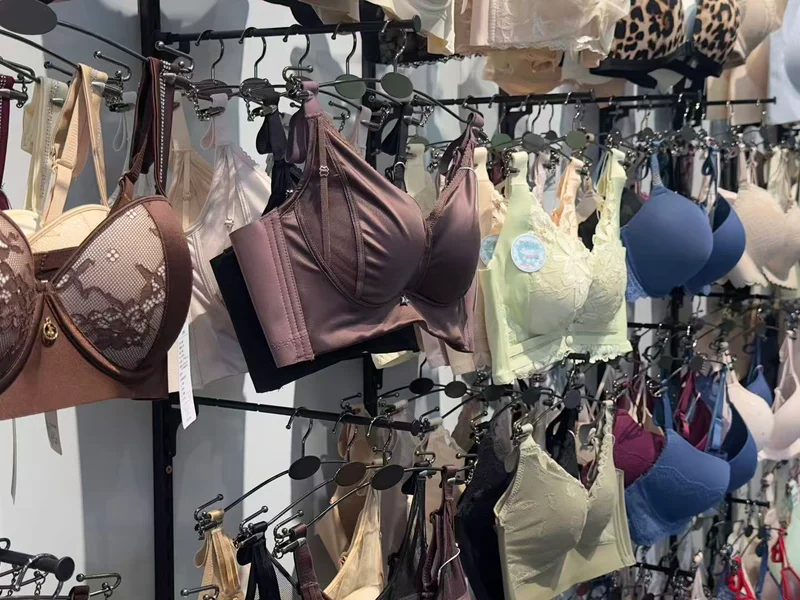
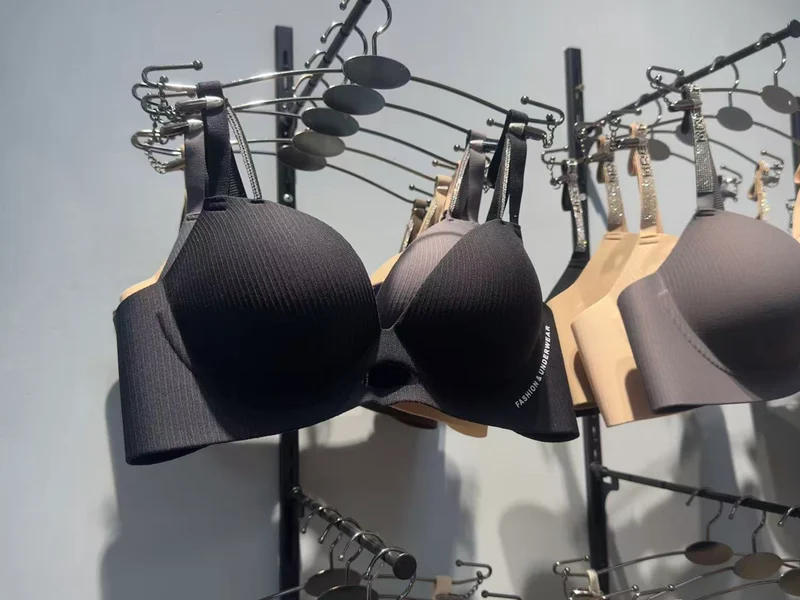
Plan Your Next Lingerie Collection
Share your product brief with our development team.